
Affiliate Disclosure
Some links on this page are affiliate links. As an Amazon Associate, we earn from qualifying purchases — at no extra cost to you. We do not buy, install, or physically handle the lights and decorations we cover; our rankings come from aggregated owner feedback and expert consensus, not first-hand testing. Commissions never change our verdicts. How we research · full disclosure.
Top 3 Picks
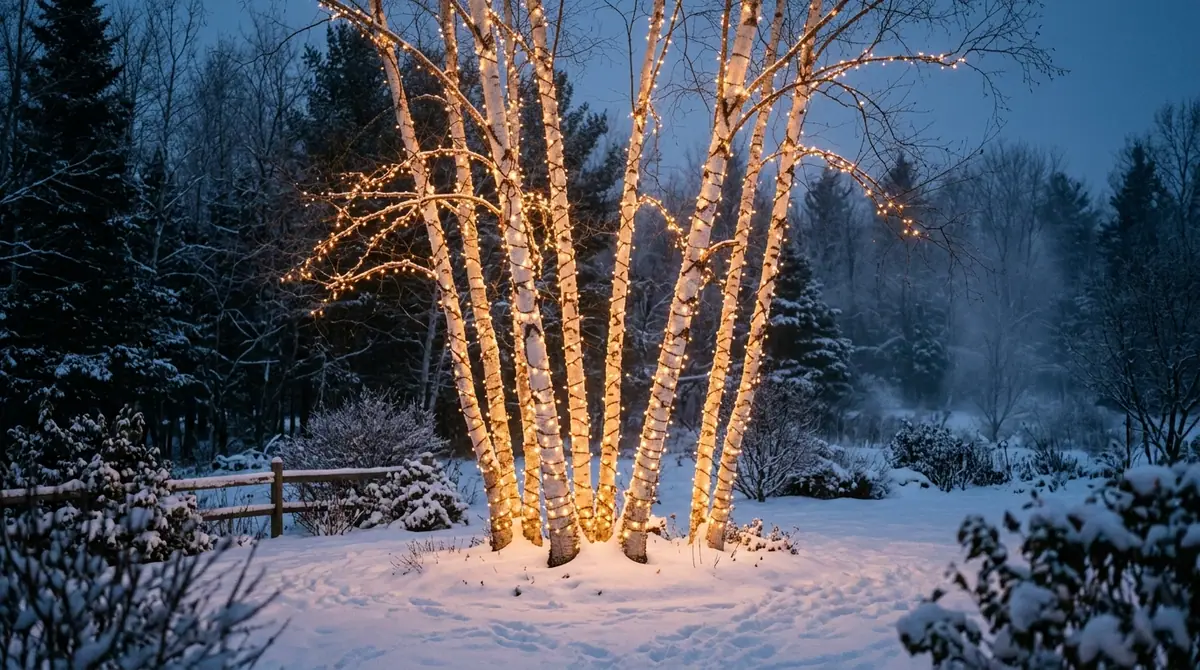
Learning how to string Christmas lights on outdoor trees is the difference between a tree that glows from top to bottom and one with a few sad strands draped over the lowest branches. The method is to wrap: spiral the trunk in a tight, even line, then travel out along each major branch and back. This guide covers the wrapping technique, how many lights to buy, choosing outdoor-rated strands, and powering a big tree safely.
Tools and materials for wrapping trees
- Outdoor-rated LED string lights on a green or brown wire (wrap-style if available)
- Plenty of strands — budget about 100 lights per vertical foot for a full look
- A light-hanging pole or extension ladder with a spotter for tall branches
- Outdoor extension cords and a GFCI-protected outlet
- An outdoor timer or smart plug
- A tape measure to size the trunk and branches
How to string Christmas lights on outdoor trees, step by step
- Measure and buy enough. Measure the trunk height and main branch lengths, then budget about 100 lights per vertical foot for full coverage and buy extra.
- Start at the power source. Begin wrapping at the base near the outlet so the first plug is where the power is.
- Test the strands. Plug in each strand and confirm it lights before wrapping it into the tree.
- Spiral up the trunk. Wrap the trunk in a tight, even spiral, turns a few inches apart, keeping the spacing consistent all the way up.
- Work out each major branch. At the top of the trunk, travel out along a main branch wrapping toward the tip, then wrap back to the trunk.
- Taper the spacing. As a branch narrows, tighten the spacing so the light stays even to the tip.
- Connect strands end to end. Join strands as you go, staying within the connect limit and splitting to a second outlet if needed.
- Route power and add a timer. Run the cord to a GFCI outlet, add a timer, light it at dusk, and fill any dark gaps.
The trunk-and-branch wrapping method
The look that reads as professional comes from wrapping, not draping. Start at the base of the trunk and spiral upward, keeping the turns a few inches apart and the spacing even, so the trunk becomes a solid column of light. When you reach the first major branch, travel out along it, wrapping toward the tip, then wrap your way back to the trunk before moving to the next branch. Doing this on every major branch is what makes the whole tree glow rather than just the trunk. Tapering the spacing tighter as a branch thins keeps the light density even out to the ends, where a tree otherwise looks sparse. Wrap-style lights sold on a spool make this faster because the wire feeds cleanly as you go. The best christmas lights for outdoor trees roundup covers wrap-friendly strands.
How many lights to buy
The single biggest mistake is buying too few and running out at chest height. A useful rule of thumb is about 100 lights per vertical foot of tree for a full, dense wrap, or 50 to 60 per foot for lighter coverage. A modest tree wrapped on the trunk and main branches can easily swallow several hundred to a couple thousand lights, so measure your trunk and main branch lengths, do the math, and then buy more than the number tells you. Extra strands are far easier to store than a half-lit tree is to fix mid-project.
Choosing the right strands
For wrapping, outdoor-rated LED strands on a green or brown wire are ideal: the dark wire vanishes against the bark in daylight, and LEDs connect into long end-to-end runs without the current draw or heat of incandescent bulbs, which matters when a single tree uses hundreds of feet of light. On very large trees, commercial-grade strands carry more connect-through length so you split the job across fewer outlets. For a lighter, all-over net look on shrubs and small trees, net lights are faster than wrapping — see the best led net lights guide. General exterior sets are covered in the best outdoor christmas lights roundup.
Powering a big tree safely
A wrapped tree is one of the heavier light loads in a yard, so plan the power. Run outdoor-rated cords from a GFCI-protected outlet, keep connectors up off the wet ground and out of any puddle at the base, and stay within each strand's connect limit — split long wraps across two outlets rather than daisy-chaining past the limit. LED sets keep the total draw low, and a timer or smart plug runs the display so you are not reaching behind the tree every night.
Common mistakes to avoid
- Buying too few lights. Running short mid-wrap is the top regret. Budget ~100 per foot and buy extra.
- Draping instead of wrapping. Draped strands look sparse. Wrap the trunk and each branch.
- Uneven trunk spacing. Loose, random turns look messy. Keep the spiral tight and consistent.
- Exceeding the connect limit. Split long runs across outlets to avoid overloading.
- Connectors on wet ground. Keep every connection up and dry, on a GFCI circuit.
Related outdoor lighting guides
Trees pair with other yard and roofline features. See how to wrap lights around columns for the same spiral technique on posts, how to hang lights on a fence nearby, and how to hang lights without a ladder for wrapping the lower tree safely.
Our Picks