

Affiliate Disclosure
Some links on this page are affiliate links. As an Amazon Associate, we earn from qualifying purchases — at no extra cost to you. We do not buy, install, or physically handle the lights and decorations we cover; our rankings come from aggregated owner feedback and expert consensus, not first-hand testing. Commissions never change our verdicts. How we research · full disclosure.
Top 3 Picks
Learning how to store Christmas lights properly is what saves you an hour of untangling next December and adds years to every strand. The whole job comes down to three habits: dry the lights, wind each one onto a reel instead of balling it up, and pack them in a sealed bin somewhere cool and dry. Do that and the set comes out ready to hang.
Tools and materials
- Light reels, spools, or stiff cardboard rectangles
- Sealed plastic storage bins with lids
- Twist ties, velcro straps, or reusable cable ties
- Labels or masking tape and a marker
- A towel for drying outdoor strands
- Optional silica gel packs to absorb moisture in the bin
How to store Christmas lights, step by step
- Test before you pack. Plug in each strand and confirm it lights fully. Sorting out a dead section now beats discovering it next year when you are on a ladder.
- Dry outdoor strands completely. Wipe down any lights that were outside and let them air-dry. Packing damp strands corrodes the connectors and pins over winter.
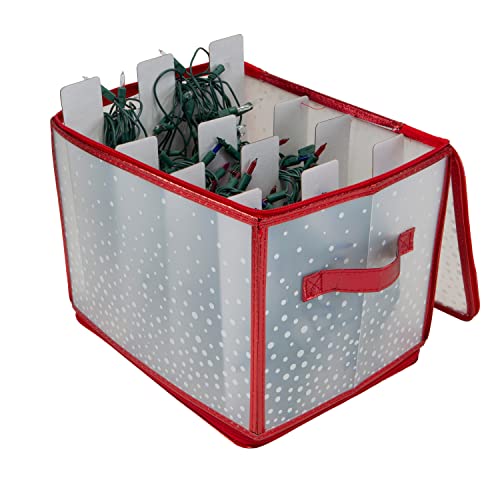
- Wind onto a reel or cardboard. Feed each strand onto a reel, spool, or cardboard rectangle in one continuous loop, plug end out so it is easy to find.
- Keep one strand per reel. Do not combine strands on one spool. Separate reels stay separate next year instead of merging into one knot.
- Secure and label. Fasten the loose end with a velcro strap and label the reel with the length and where it goes, so setup is a matter of grabbing the right one.
- Pack into sealed bins. Lay the wound reels in a plastic bin with a tight lid. A sealed bin keeps out moisture, dust, and rodents that chew wire.
- Store somewhere cool, dry, and stable. A closet or basement beats an attic that bakes and freezes. Keep the bin off a concrete floor, which draws damp.
The tangle problem: why winding onto a reel or spool beats balling
Lights tangle because a wire crammed into a bag forms dozens of loops that cross and lock together. Winding onto a reel keeps the whole strand in one loop, so it feeds off cleanly next year with a single pull. A cardboard rectangle works just as well as a store-bought reel: wrap the strand around the long edge, notch the corners to hold the ends, and stack the flat cards in the bin. If you want a purpose-built system, the best christmas light storage roundup compares reels, bags, and spool boxes by capacity.
Winding technique for a tangle-free strand on cardboard
Start with the plug on the outside so it is the first thing you reach for. Feed the wire on under light, even tension — too loose and it slips, too tight and it stresses the insulation. Keep the loops flat against each other rather than piling up. A velcro strap on the finished coil holds it, and it reuses every year unlike a twist tie. This same method works whether you are storing mini lights, C9 strands, or net lights.
Where to store lights so they last: a cool, dry, stable space
Temperature is the quiet killer of Christmas lights. An unheated attic can freeze in December and hit well over a hundred degrees by August, and that constant cycling makes wire insulation brittle and cracks bulb seals. A cool, dry, temperature-stable spot — an interior closet, a finished basement, a shelf in a conditioned space — keeps strands supple for years. Whatever the location, a sealed plastic storage bin does the real work of blocking moisture and pests.
Storing outdoor lights and cords without corrosion
Outdoor strands need the extra drying step because they have been rained on and dew has collected in the sockets. Let them dry fully, coil the outdoor extension cords separately so they do not tangle with the lights, and add a silica gel pack to the bin to pull residual moisture. Dry storage is what keeps outdoor connectors from corroding — packing a damp strand is exactly what makes the pins corrode over winter. See the how to hang christmas lights outside guide for putting them back up cleanly next year.
Common mistakes to avoid
- Balling lights into a bag. That is exactly what creates the tangle. Wind each strand onto a reel or card.
- Packing them damp. Moisture corrodes connectors over winter. Dry outdoor strands fully first.
- Storing in an attic that bakes and freezes. Temperature swings make wire brittle. Choose a cool, stable space.
- Skipping the test. Find dead strands now, not on the ladder in December.
- Using flimsy cardboard boxes. They let in damp and rodents. A sealed plastic bin protects the strands.
Set up faster next season
Good storage pays off the moment you unpack. Labeled reels and tested strands mean you go straight to hanging. When it is time to put them back up, the how to hang christmas lights on stucco and gutter guides cover the mounting, and if a strand did not survive storage the best outdoor christmas lights roundup helps you replace it.
Our Picks