
Affiliate Disclosure
Some links on this page are affiliate links. As an Amazon Associate, we earn from qualifying purchases — at no extra cost to you. We do not buy, install, or physically handle the lights and decorations we cover; our rankings come from aggregated owner feedback and expert consensus, not first-hand testing. Commissions never change our verdicts. How we research · full disclosure.
Top 3 Picks
Solar Christmas lights work by using a small solar panel to charge a built-in rechargeable battery by day, then running LED bulbs from that stored charge after dark. A dusk sensor switches them on at nightfall and off at dawn — no cords, no outlet, no batteries to buy. Here's the full cycle, from panel to battery to LED, why runtime changes with the weather, and how to get the most light out of a set through winter.
The solar panel, rechargeable battery, and LED cycle
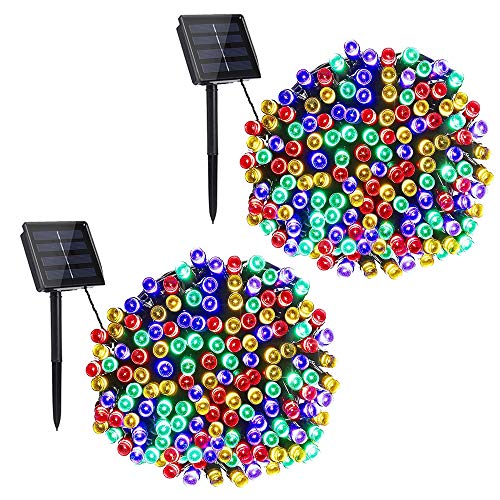
A solar light set is a tiny self-contained power system. During daylight, the photovoltaic solar panel converts sunlight into a small electric current. That current charges a rechargeable battery, usually a single AA battery, tucked inside the panel housing. When darkness falls, the stored charge flows from the battery to the LED string lights, lighting the bulbs. Because LEDs draw so little power, a modest panel and a small battery can run a whole strand for hours. The whole loop repeats daily on a dusk to dawn cycle: charge by sun, discharge by night, no wiring in between.
How the dusk to dawn light sensor turns them on
The automatic on-off is the other half of the magic. It's handled by a light sensor called a photoresistor. When the panel stops receiving sunlight at dusk, the sensor reads the darkness and switches the LEDs on from the battery. When morning light returns, it shuts them off and lets the panel charge again. That's why solar lights have no timer to set and no switch to flip — the sensor does it. Most sets also include a mode button for steady or twinkling effects, but the core dusk to dawn behavior runs itself.
What decides how long solar lights run: runtime, sunlight, and battery
Runtime isn't fixed — it depends on how much energy the panel banked that day and how fast the lights spend it. The main factors:
- Sunlight hours — more direct sun on the panel means a fuller battery and a longer run
- Panel size and quality — a bigger, better panel gathers more charge in the same daylight
- Battery capacity — a higher-capacity cell stores more energy for the evening
- LED count and mode — more bulbs, or steady rather than twinkle mode, drain the battery faster
- Weather and season — clouds and short winter days cut charging time and shorten runtime
A well-charged set commonly runs 6 to 8 hours, enough to cover the evening. On a dim, overcast day the same set simply runs for fewer hours that night. The best solar Christmas lights guide favors sets with larger panels and bigger batteries for exactly this reason.
Why solar lights struggle in winter — and how to help
Christmas is the hardest season for solar, which sounds like a contradiction until you look at the sun. Winter days are short and the sun sits low. So the panel gets fewer effective charging hours than in summer, and runtime drops accordingly. You can claw a lot of that back. Mount the panel where nothing shades it, and angle it toward the low winter sun facing south. Wipe dust and brush snow off the cells so light reaches them. Then choose a set with a generous panel and battery. Even then, expect shorter runs on heavily overcast days — that's physics, not a fault.
Solar vs battery vs plug-in: which powers your display
Solar's strength is convenience: no cords, no outlet, no batteries to buy, and automatic operation, which makes it ideal for fence lines, garden beds, and paths far from power. Its limit is weather-dependent runtime. Battery-operated sets give you predictable runtime anywhere but need fresh cells or recharging, while plug-in lights offer unlimited, reliable power at the cost of needing an outlet and cord. Many displays mix all three. If your spot has no socket, our guide on powering outdoor lights without an outlet compares solar, battery, and power-station options, and the best battery-operated Christmas lights cover the cordless alternative to solar.
Our Picks