
Affiliate Disclosure
Some links on this page are affiliate links. As an Amazon Associate, we earn from qualifying purchases — at no extra cost to you. We do not buy, install, or physically handle the lights and decorations we cover; our rankings come from aggregated owner feedback and expert consensus, not first-hand testing. Commissions never change our verdicts. How we research · full disclosure.
Top 3 Picks
How to power outdoor Christmas lights without an outlet comes down to four options: battery-operated sets, solar lights with their own panel, a portable power station, or a weatherproof extension cord run from the nearest indoor outlet. Which one you pick depends on how big the display is and how far it sits from power. Here's how each method works, how long it lasts, and how to run it safely in the cold and wet.
Four ways to power outdoor lights with no outlet nearby
Every no-outlet setup is a trade-off between size, runtime, and effort. Battery operated light sets are the simplest for small, remote spots. Solar lights need no wiring or batteries you buy, charging themselves by day. A portable power station acts as a big rechargeable outlet for a medium display. And a weatherproof extension cord borrows power from an indoor, garage, or exterior outlet you already have. Pick by the scale of what you're lighting. A mailbox and a wreath want batteries or solar. A lit tree or a run of net lights wants a cord or a power station.
Battery operated Christmas light sets and their runtime
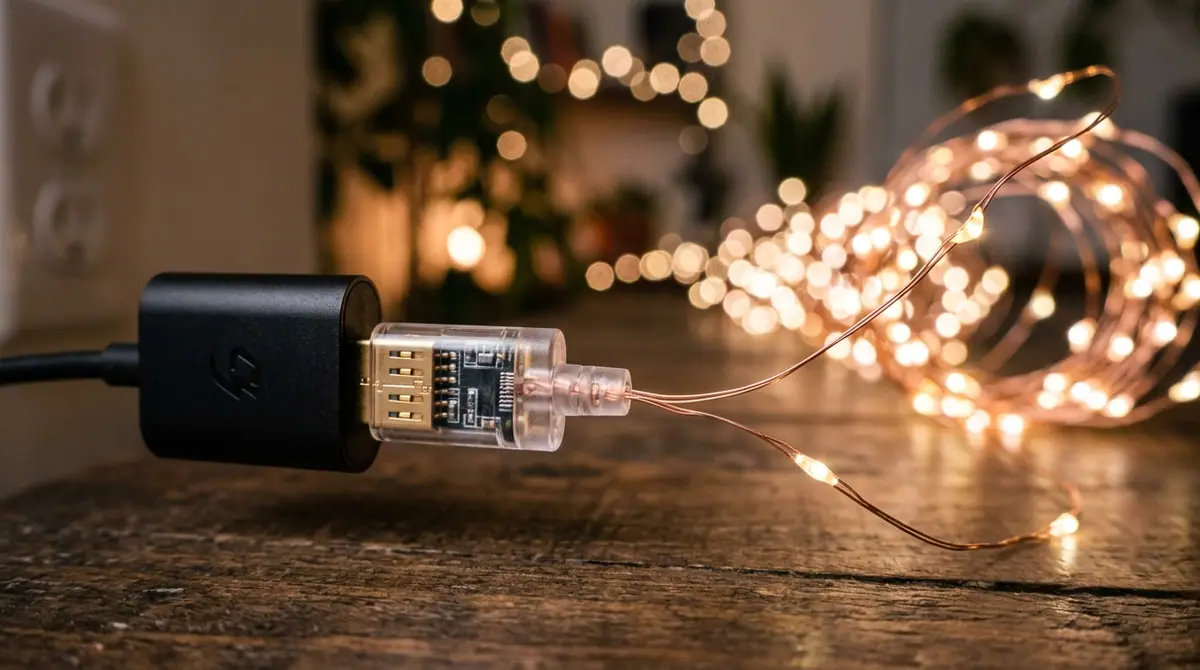
Battery operated sets are purpose-built for places with no power. Most run on AA batteries or a rechargeable pack in a small waterproof box. Because LEDs draw so little current, a set of 50 to 100 lights runs roughly 18 to 24 hours per set of batteries, and much longer on a nightly timer. They're ideal for wreaths, mailboxes, potted plants, and the far corners of a yard. In freezing weather, lithium AAs or a rechargeable pack outlast standard alkalines. See the best battery-operated Christmas lights for sets with weatherproof boxes and built-in timers.
Solar-powered lights that need no wiring at all
Solar sets are the most hands-off option: a small panel charges an internal battery by day and the lights run automatically after dark, with no cords and no batteries to buy. They shine for fence lines, garden beds, and pathways far from any outlet. The catch is winter — short days and low sun give the panel fewer charging hours, so runtime drops on overcast days. Mount the panel where it gets the most direct, unobstructed sun, ideally facing south. Our explainer on how solar Christmas lights work covers the panel-and-battery cycle, and the best solar Christmas lights guide picks sets with larger panels for weak winter light.
Portable power stations and rechargeable battery packs for LED lights
When batteries won't last and a cord won't reach, a portable power station bridges the gap. These rechargeable lithium units have standard AC outlets, so you plug your normal light strings straight in. You then get hours of runtime from a display's worth of LEDs. Charge the station indoors, carry it out to the display, and keep it in a weatherproof enclosure off the ground. A power station is the right call for a detached spot — an island bed, a gazebo, a dock — that's too far for a safe cord run but bigger than a battery set can handle.
Running a weatherproof extension cord on a GFCI outlet safely
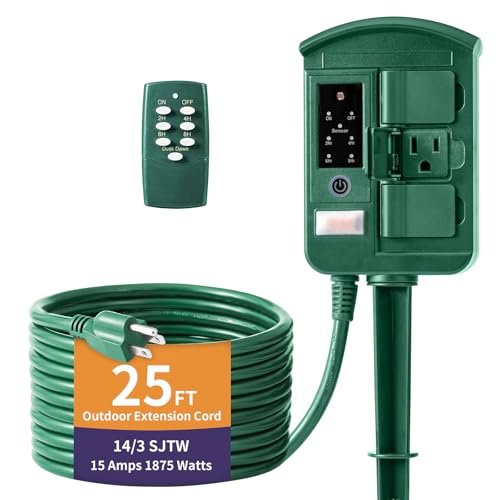
The most common fix is simply borrowing an outlet you already have. Run an outdoor rated extension cord of the correct gauge from an indoor, garage, or exterior GFCI outlet to the display. Heavier loads need a thicker, lower-gauge cord to avoid voltage drop and heat. Keep the plug connections up off the ground and out of standing water. Protect any cord crossing a walkway with a cover, and don't daisy-chain several cords or exceed the amperage rating. Add up your strings' draw first — our guide on how many amps Christmas lights use shows how to size the cord and circuit so nothing overheats or trips.
Which no-outlet method is right for your display
Size decides it. For a wreath, a small tree, or a mailbox, battery or solar sets are cleanest — no cords, quick to place. For a fence line or path far from power, solar wins on convenience. For a medium display in a detached spot, a power station gives you real AC runtime. And for a big, always-on display near the house, an outdoor rated extension cord on a GFCI outlet is still the most reliable. Whatever you choose, keep it weatherproof and anchored; securing outdoor decorations from wind keeps battery boxes and cords from moving, and if you're lighting a rail or ledge, hanging lights on a balcony pairs well with a battery or solar set.
Our Picks