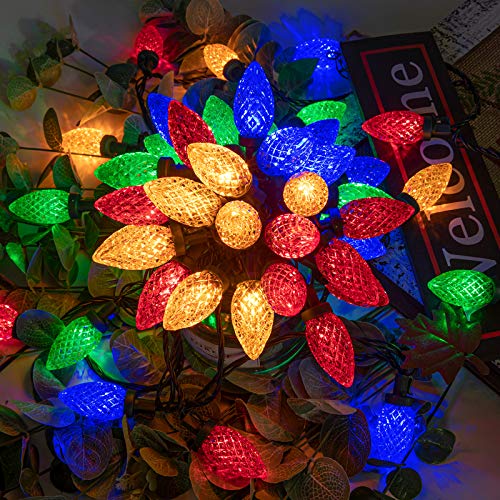
Christmas Lights 101 & Safety
Christmas lights 101 is where the practical questions get answered. How many lights you need, how to put them up and take them down safely, what they cost, and how to dispose of them responsibly. This hub gathers our plain-English guides. Light your tree, roofline, and windows with confidence and no surprises.
Start with the numbers: lights per foot
The most common question every December is simple. How many lights do I need? The answer scales with the size of what you're lighting. For a tree, plan around 100 bulbs per foot of height for a basic look. Go up to 200 per foot for a full, professional glow. Our guide on how many Christmas lights for a 6ft tree breaks the lights-per-foot math into a simple sizing table. Getting the count right the first time saves a second trip to the store and a patchy, half-lit tree.
Christmas lights safety: GFCI, circuits and ladders
Christmas lights involve electricity, ladders, and often the outdoors. A few habits prevent almost every mishap. Plug outdoor Christmas lights into a GFCI-protected outlet. Never overload a circuit. Always have a spotter when you're on a ladder. Check each strand for frayed wire or cracked sockets before hanging. Use clips rather than staples or nails. Switch everything off before you leave the house or go to bed. Good safety habits are what keep the season fun.
Don't daisy-chain too many string lights
Every set of string lights has a limit on how many strands you can connect end to end. That number is printed on the plug or the box. Daisy-chain more than the rating allows and you overload the first plug. That can trip a breaker or overheat the wire. LED string lights draw far less power, so you can safely connect many more of them in one run than incandescent sets.
Avoiding a fire hazard with LED strands
An overloaded circuit or a damaged strand is the real fire hazard, not the lights themselves. LED strands run cool to the touch and draw a fraction of the power, which lowers the risk on long runs. Replace any strand with cracked sockets or exposed wire rather than repairing it. Keep bulbs away from dry greenery, and switch the lights off overnight to remove the fire hazard while you sleep.
LED vs. incandescent and using a timer
LED and incandescent strands light a tree the same way, but they differ in cost and heat. LED strands use far less power, run cool, and last for many seasons. Incandescent strands are cheaper upfront but hotter and shorter-lived. Put every set on a timer so the lights come on at dusk and switch off automatically. A timer saves power and means you never leave lights burning overnight.
Timing and installation cost
Knowing when to hang lights and what installation costs helps you plan. If you're weighing whether to hang them yourself or hire help, our breakdown of how much it costs to have Christmas lights installed lays out realistic price ranges. Professional installation cost depends on your roofline height and the number of strands, so measure before you call.
When to put up and take down lights
Taking lights down before harsh late-winter weather protects the wiring and bulbs. See our guide on when to take down Christmas lights for the timing. Waiting too long to take down a display lets ice and UV damage the strands, which shortens their life.
End-of-season: recycle lights as e-waste
When a strand finally dies, don't toss it in the curbside recycling. The tangled wire jams recycling machinery, so lights are treated as e-waste. Our guide on how to dispose of Christmas lights covers store take-back programs, e-waste facilities, and scrap-metal recyclers. It also covers when to donate a working set instead. Recycling the copper keeps it out of landfill and closes out the season responsibly.
Extension cord and outdoor power safety
Outdoor runs almost always need an extension cord, and the gauge matters. Use a heavy-gauge, outdoor-rated extension cord for long runs, and keep the connections off the wet ground. Never chain several thin indoor cords together outside. A single, correctly rated extension cord into a GFCI outlet is the safe way to power a display far from the house.
A simple plan for a stress-free season
If you only remember a few things, make it these. Buy a little more light than you think you need, so the tree and roofline glow evenly. Choose LED strands for lower power use, cooler operation, and longer runs you can safely connect. Plug outdoor lights into a GFCI outlet, and put everything on a timer. When a strand finally fails, recycle it as e-waste rather than binning it. Follow that short checklist and the guides below fill in the rest.
Affiliate Disclosure
Some links on this page are affiliate links. As an Amazon Associate, we earn from qualifying purchases — at no extra cost to you. We do not buy, install, or physically handle the lights and decorations we cover; our rankings come from aggregated owner feedback and expert consensus, not first-hand testing. Commissions never change our verdicts. How we research · full disclosure.
Top 3 Picks
Our Picks