
Affiliate Disclosure
Some links on this page are affiliate links. As an Amazon Associate, we earn from qualifying purchases — at no extra cost to you. We do not buy, install, or physically handle the lights and decorations we cover; our rankings come from aggregated owner feedback and expert consensus, not first-hand testing. Commissions never change our verdicts. How we research · full disclosure.
Top 3 Picks
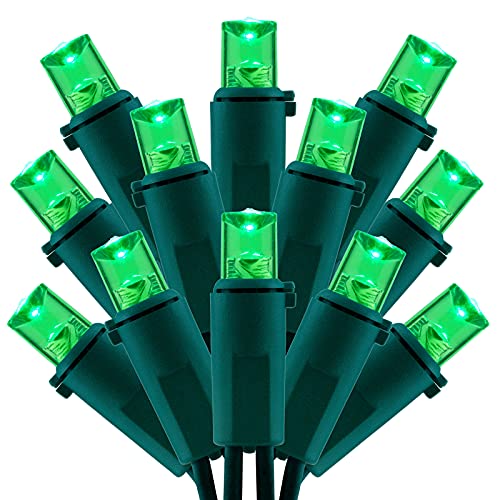
The wide-angle vs traditional LED Christmas lights choice is about how the bulb throws its light. Wide-angle LEDs use a concave, dome-shaped lens. It spreads light out to the sides, so the strand reads brightly from almost any angle. Traditional-style LEDs copy the classic mini-bulb shape and beam more forward. That gives a familiar pointed sparkle but a narrower bright zone. Wide-angle wins on even coverage. Traditional wins on the nostalgic look. Both are energy-sipping LEDs.
What wide-angle LED Christmas lights are: even, all-directions glow
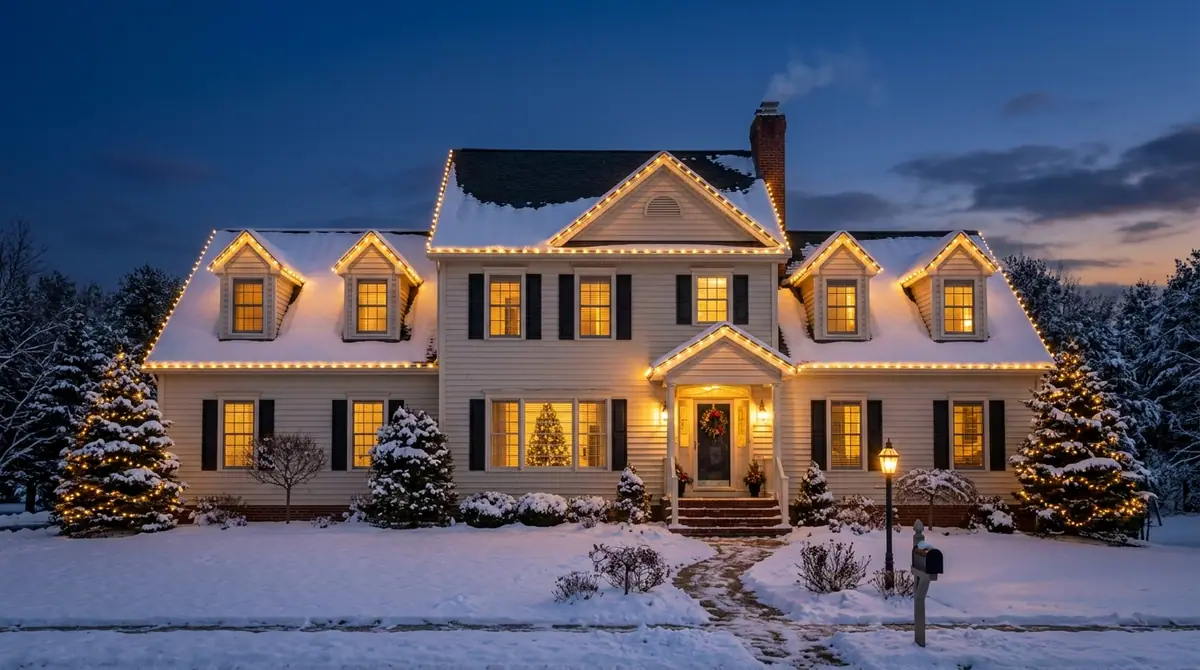
Wide-angle LEDs are also called conical, bullet-cap, or concave LEDs. They have a smooth dome lens that scatters light across a broad angle instead of aiming it forward. The practical result is even visibility. Whether you view the bulb head-on or from the side, it looks bright. So a wrapped tree or an outlined roofline glows consistently from every direction people might see it. That makes wide-angle a favorite for wrapping Christmas trees, tracing rooflines and trim, and any display viewed from multiple angles. The look is clean, modern, and uniform. It is not the classic pointed mini-bulb sparkle. See the best LED Christmas lights roundup for top wide-angle sets.
What traditional LED Christmas lights are: the classic mini-bulb look
Traditional-style LED Christmas lights are shaped like the familiar incandescent mini bulb. It is a small teardrop or pointed bulb. They beam light more forward, so the sparkle is strongest when you look straight at the strand. This gives the nostalgic, pointed twinkle many people associate with classic Christmas lights. And it comes in an energy-efficient LED that runs cool and lasts for years. The trade-off is a narrower bright zone. The bulbs dim visibly when viewed from the side. So a tree or roofline can look uneven from certain angles. If the classic mini-bulb look is your priority, traditional-shaped LEDs deliver it. The best Christmas tree lights roundup includes both bulb styles.
Wide-angle vs traditional LED Christmas lights: side by side
| Factor | Wide-angle LED | Traditional LED |
|---|---|---|
| Bulb shape | Concave dome (conical) | Classic mini-bulb teardrop |
| Light spread | Wide, to the sides | Forward-beamed |
| Viewing angle | Bright from any angle | Brightest head-on |
| Look | Clean, even, modern | Nostalgic pointed sparkle |
| Best for | Trees, rooflines, all-angle | Classic-look displays |
| Energy use | Very low (LED) | Very low (LED) |
| Evenness on a tree | Consistent all around | Can look uneven from the side |
Beam spread and viewing angle: which reads brighter?
This is the core difference. A wide-angle bulb spreads its output sideways. So it stays bright as you walk around a tree or view the house from down the street at an angle. The display reads evenly from everywhere. A traditional-shaped bulb concentrates its beam forward. It can look just as bright straight on, but noticeably dimmer from the side. Think of anything seen from multiple directions: a freestanding tree, a corner of the house, a wrapped column. For those, wide-angle gives more consistent brightness. Head-on only, the two look closer.
The look: modern even glow vs classic mini bulb sparkle
Beyond brightness, the styles simply look different. Wide-angle LEDs give a clean, even, contemporary glow. It is uniform and tidy. That suits modern displays and all-around tree wrapping. Traditional-shaped LEDs give the pointed, twinkling mini-bulb look. It reads as classic, nostalgic Christmas. If you want your tree or roofline to feel timeless and familiar, the traditional shape carries that. If you want smooth, even coverage that looks the same from any angle, wide-angle is the better match. It is a genuine style call, not a quality gap.
Color temperature, warm white, cool white and UL safety
Both are LEDs. So both sip electricity, run cool, and connect into long runs from one plug. Energy use is not the deciding factor. What matters is matching bulb style to the job and keeping color temperature consistent. Use warm white around 2700K for a cozy classic glow. Use cool white for a crisp modern tone. Buy one bulb style and one temperature per zone so the display looks intentional. Favor outdoor-rated sets with a UL listing for exterior runs. For the full efficiency picture, see our LED vs incandescent Christmas lights guide. Plug outdoor runs into a GFCI outlet.
Which should you buy?
Choose wide-angle LED Christmas lights for wrapping trees, outlining rooflines and trim, and any display viewed from many directions, where even brightness from every angle and a clean, modern look matter most.
Choose traditional LED Christmas lights if the classic, pointed mini-bulb sparkle is your priority and the display is mostly viewed head-on — the nostalgic look in an efficient, long-lasting LED.
Deciding on color and strand too? See multicolor vs white and mini lights vs C9, or browse the full Christmas lights comparisons hub.
Our Picks