
Affiliate Disclosure
Some links on this page are affiliate links. As an Amazon Associate, we earn from qualifying purchases — at no extra cost to you. We do not buy, install, or physically handle the lights and decorations we cover; our rankings come from aggregated owner feedback and expert consensus, not first-hand testing. Commissions never change our verdicts. How we research · full disclosure.
Top 3 Picks
LED Christmas lights are string lights that make light with light-emitting diodes instead of a heated metal filament. Each LED is a small semiconductor that turns electricity almost directly into light, so the bulbs run cool, draw 80 to 90 percent less power than incandescent Christmas lights, and last for many seasons. They are sold in warm white, cool white, single colors, and full-color RGB, and they now make up the large majority of Christmas light sets on the market.
How LED Christmas lights work: diodes vs filament
An LED, or light-emitting diode, is a semiconductor that emits light when current passes through it. There is no filament to heat and no gas to excite. Almost all of the energy becomes visible light rather than heat. That single fact explains every advantage LED Christmas lights have. They run cool, they sip power, and they last a long time because nothing burns out. A small rectifier in the plug converts household alternating current into the direct current the diodes need, which is why the plug can feel slightly warm while the strand stays cool.
LED vs incandescent Christmas lights: watts and heat
The clearest way to understand LED lights is to compare them with the older incandescent bulbs they replaced. An incandescent bulb heats a thin filament until it glows, wasting roughly 90 percent of its energy as heat. An LED skips the heat and converts energy straight to light, which is why it is so efficient and draws so few watts. The table below sums up the practical differences.
| Property | LED Christmas lights | Incandescent Christmas lights |
|---|---|---|
| Power per 100 bulbs | 4–6 watts | ~40 watts |
| Bulb temperature | Cool to the touch | Hot to the touch |
| Sets you can connect | Many end to end | Only a few |
| Typical lifespan | Many seasons | Fewer seasons |
| Light quality | Bright, crisp | Warm, traditional glow |
For most displays the efficiency, cool running, and long connectable runs make LEDs the better buy, which is why they dominate our best LED Christmas lights picks. Incandescent bulbs still hold on for shoppers who want a warmer, more nostalgic glow, covered in what are incandescent Christmas lights and the full LED vs incandescent Christmas lights comparison.
LED Christmas light colors: warm white, cool white, and RGB
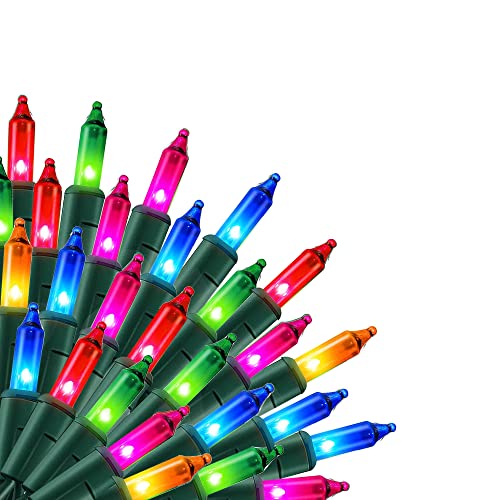
Because an LED emits a specific color of light directly, LED Christmas lights come in a wide range of colors without needing a painted glass bulb. Warm white sits near 2700K for a cozy amber tone. Cool white sits around 5000K to 6500K for a crisp icy look. Single-color sets cover red, blue, green, purple, and pink. Full-color RGB and addressable RGBIC sets can switch between all of these and cycle effects from a remote or app. LED bulbs are made in the same shapes as older lights too, from tiny mini bulbs to faceted C6, C7, and large C9 bulbs, so you can match the shape to the surface.
Why LED Christmas lights run cool and safe
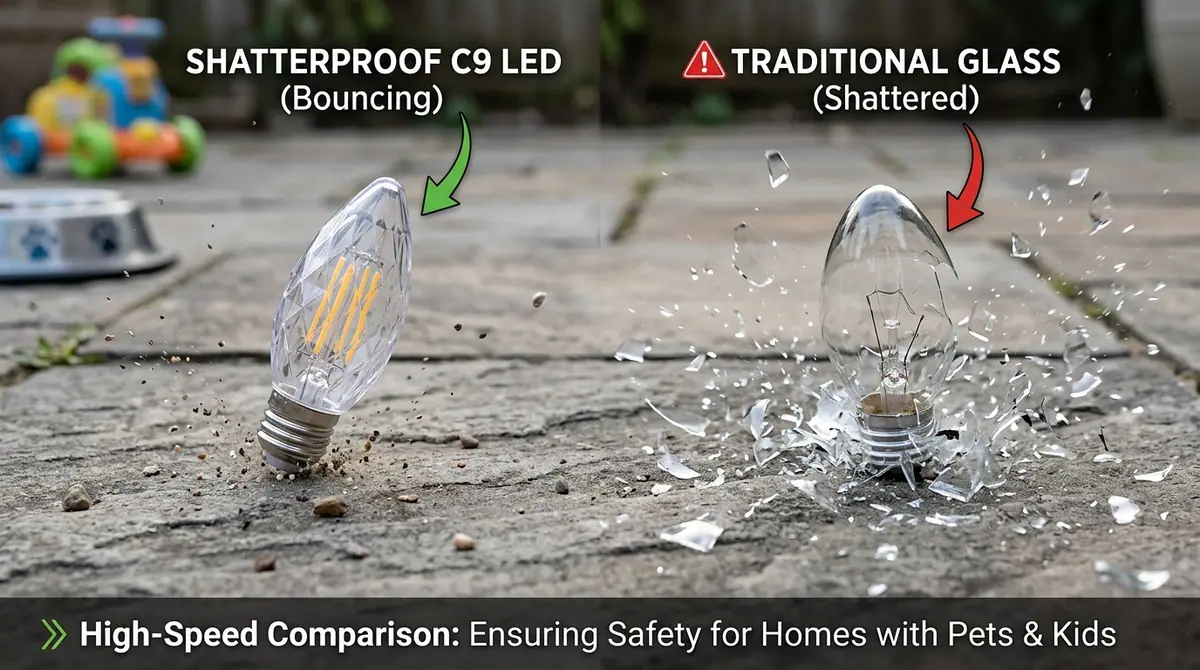
The cool running of an LED is a safety feature, not just an efficiency one. A hot incandescent bulb resting against dry needles or fabric has long been a holiday fire trigger. An LED that stays near room temperature removes that risk. LEDs are also gentler on live trees, which dry out faster near heat. As with any electrical product, the remaining risk comes from damaged cords, overloaded circuits, and failed connectors rather than the bulbs. Use UL-listed sets, avoid overloading outlets, plug outdoor runs into a GFCI outlet, and keep connectors up off wet ground. To see how little heat they give off, read do LED Christmas lights get hot.
How long do LED Christmas lights last?
LED Christmas lights are commonly rated for tens of thousands of hours because there is no filament to burn out. In practice the LEDs outlive the connectors and wire. That means the way you store them matters more than the diodes themselves. Coil the strands loosely, keep them dry, and avoid crushing the plug or connectors, and a good set will run for many seasons. Our guide to how long LED Christmas lights last goes deeper on lifespan and failure points.
Choosing LED Christmas lights: bulb shapes and length
Start with the color and tone you want, then the bulb shape, then the length. Decide between warm white, cool white, a single color, or color-changing RGB. Pick tiny mini lights for wrapping a tree, or C6, C7, and C9 bulbs for outlines and rooflines. Buy enough length to reach about 100 lights per vertical foot of tree, and check the maximum connectable run so you can link sets safely. From there, match the waterproof rating to indoor or outdoor use. Our best RGB Christmas lights and best white Christmas lights roundups cover the most popular starting points, and the bulb types and colors guide maps every option.
Our Picks