
Affiliate Disclosure
Some links on this page are affiliate links. As an Amazon Associate, we earn from qualifying purchases — at no extra cost to you. We do not buy, install, or physically handle the lights and decorations we cover; our rankings come from aggregated owner feedback and expert consensus, not first-hand testing. Commissions never change our verdicts. How we research · full disclosure.
Top 3 Picks
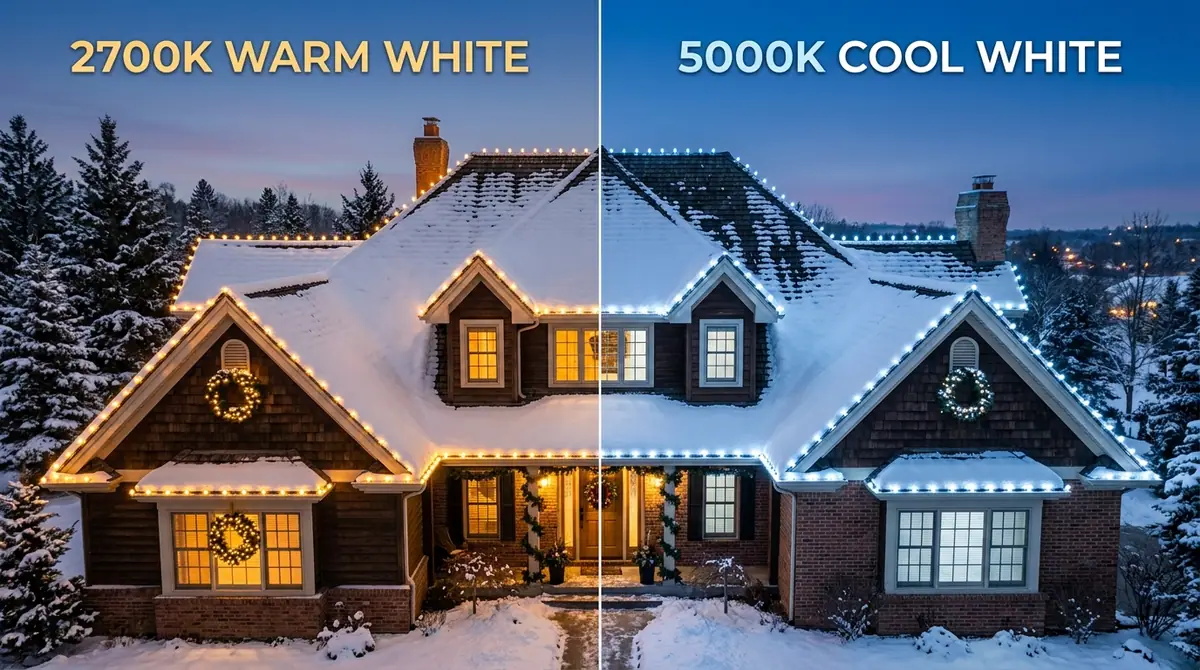
The warm white vs cool white Christmas lights choice is all about color temperature and the mood it creates: warm white glows golden and cozy like traditional incandescent bulbs, while cool white shines crisp and icy-blue for a modern, wintry look. Both are "white" — they just sit at opposite ends of the color scale, and the right one depends on the feel you're after.
What warm white is: a golden 2700K glow
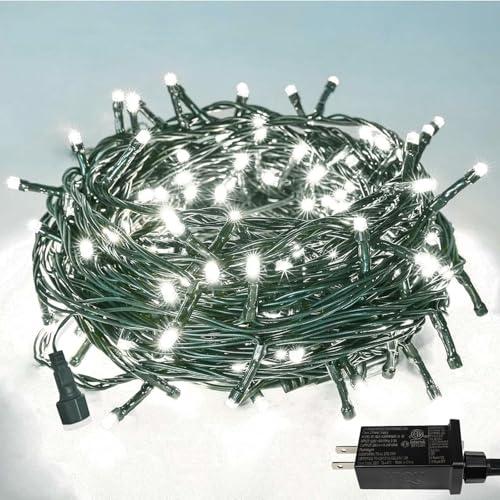
Warm white lights fall roughly between 2200K and 2700K on the color-temperature scale, giving off a soft, golden glow. It's the tone people associate with classic incandescent Christmas lights and candlelight — cozy, inviting, and nostalgic. Warm white flatters warm-toned brick, wood, and green foliage, and it's the safe, traditional default for most trees and homes.
What cool white is: crisp blue-white at 5000-6500K
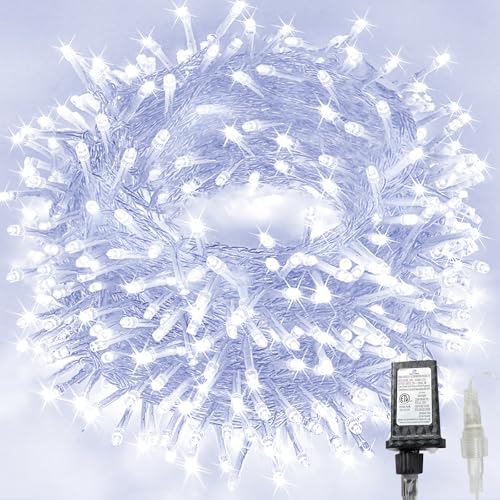
Cool white lights sit up around 5000K to 6500K, producing a crisp, bright, blue-white light. It reads as modern, clean, and wintry — think icicles, snow, and a sharp, contemporary display. Cool white can look stunning on a white or gray house, on birch and bare branches, and anywhere you want that frosty, "cold winter night" effect. Against warm siding or a very traditional setup, though, it can look a touch clinical.
Warm white vs cool white: color temperature side by side
| Factor | Warm white | Cool white |
|---|---|---|
| Color temperature | ~2200-2700K | ~5000-6500K |
| Tone | Golden, cozy | Blue-white, icy |
| Mood | Traditional, warm | Modern, wintry |
| Best on | Green trees, brick, wood | White/gray homes, birch, snow themes |
| Pairs with | Gold, red, classic decor | Blue, silver, icicle accents |
| Mimics incandescent? | Yes | No |
Kelvin and color temperature: how the mood shifts
Color temperature is measured in Kelvin (K), and it runs counter-intuitively: lower numbers look warmer, higher numbers look cooler. A 2200–2700K bulb throws that golden, candle-like glow, while a 5000–6500K bulb reads bright and blue. That single number sets the whole mood of a display before you add a single ornament. When you shop, the box usually prints the Kelvin rating — check it, because two sets both labeled "white" can sit at opposite ends of the scale. Brands like GE, Govee, Twinkly, and Philips all specify color temperature on their string lights, so you can match tone across every set in a display instead of ending up with a patchwork of warm and cool runs.
Which looks better on a Christmas tree?
Warm white is the traditional winner on a green tree — the golden tone makes needles look lush and warms up ornaments and tinsel. Cool white gives a cleaner, more contemporary, almost snow-dusted look that suits minimalist or blue-and-silver themed trees. If you love the classic cozy tree, go warm white; if you're building a modern winter-wonderland palette, cool white earns its place.
Which looks better outside? Rooflines, icicles, and snow
Outdoors it comes down to your house and theme. Warm white along a roofline gives a welcoming, timeless glow that flatters most homes. Cool white excels for icicle lights, snow themes, and modern facades — it genuinely looks colder, which is the point. A popular trick is warm white for the main outline and cool white just for icicles or a single accent, so the contrast reads as deliberate rather than mismatched.
LED vs incandescent, and matching a warm-toned home
Almost all warm white and cool white sets sold today are LED; true incandescent only comes in warm white, since a glowing filament can't produce a cool tone. That means if you want cool white at all, you're buying LED — and if you want warm white, an LED at 2700K matches the old incandescent look while running cool and cheap. Read your house before deciding: a warm-toned brick or timber home almost always looks best in warm white, while a white, gray, or rendered facade can carry cool white without looking stark. Favor UL-listed sets for outdoor use.
Traditional vs modern string lights
Think of it as a style dial. Traditional displays — green tree, red-and-gold ornaments, classic roofline — sit most comfortably in warm white string lights. Modern, minimalist, or winter-wonderland themes lean cool white, often paired with blue and silver. Neither is wrong; the mistake is mixing them by accident. Pick your lane per zone (warm for the cozy core, cool for icy accents) and the whole display reads intentional. To shop by tone, see the roundups below.
Which should you buy?
Choose warm white for a classic, cozy, traditional look, for green trees, and for warm-toned homes. It's the closest match to old-fashioned incandescent and the most broadly flattering choice.
Choose cool white for a modern, icy, wintry aesthetic, for icicles and snow themes, and for white, gray, or minimalist setups. It makes a bold, contemporary statement.
Ready to shop by tone? See the best warm white Christmas lights and the broader best white Christmas lights roundup, both shortlisted from the top-rated sets on Amazon, or, if you'd rather add color, the best colored Christmas lights. Deciding on bulb style too? Compare C7 vs C9 sizes, and for the tree itself, our real vs artificial tree and fairy lights vs string lights guides help round out the look.
Our Picks