

Affiliate Disclosure
Some links on this page are affiliate links. As an Amazon Associate, we earn from qualifying purchases — at no extra cost to you. We do not buy, install, or physically handle the lights and decorations we cover; our rankings come from aggregated owner feedback and expert consensus, not first-hand testing. Commissions never change our verdicts. How we research · full disclosure.
Top 3 Picks
The real vs artificial Christmas tree decision comes down to five things: cost over time, convenience, the scent and tradition of a fresh tree, realism and consistency, and environmental impact. A real tree gives you that unbeatable pine smell and a cheap first year; an artificial tree gives you the same full shape every December with no watering, no needle drop, and a lower cost over its lifespan. Here's how the two compare on every point that matters, and a clear verdict by household.
Real vs artificial Christmas tree: the quick verdict
If you love the ritual — picking a fresh tree, the smell of pine filling the room, the annual outing — and you don't mind watering it and vacuuming needles, a real Christmas tree is worth it. If you want the same reliably full, symmetrical tree every year, zero needle drop, and a lower total cost across a decade, an artificial tree wins. Most families who prize convenience and consistency land on artificial; those who prize tradition and scent stay real. Neither choice is wrong, and this comparison lays out exactly where each one pulls ahead.
Real vs artificial Christmas tree compared
| Factor | Real tree | Artificial tree |
|---|---|---|
| Upfront cost | Lower (but every year) | Higher (but reused) |
| Cost over 10 years | Higher overall | Lower overall |
| Scent | Fresh pine aroma | None (unless scented) |
| Convenience | Watering, cleanup, disposal | Set up and store, reuse |
| Needle drop | Yes, especially late season | None |
| Consistency of shape | Varies tree to tree | Identical every year |
| Pre-lit option | No | Yes, common |
| Lifespan | ~4–5 weeks indoors | ~6–10+ seasons |
| Environmental note | Renewable, compostable | Reusable plastic/metal |
Cost over time: upfront cost vs cost per year
This is where the two trees diverge most. A real Christmas tree has a low upfront cost. But you pay it every December, so ten Christmases means ten trees. An artificial tree costs more the day you buy it. Then that cost spreads across every season you reuse it. Divide the price by the years you keep it, and the cost per year drops fast. A mid-range artificial tree usually pays for itself in about four to seven seasons. Keep it a decade and its yearly cost is a fraction of a real tree's. The real tree only wins on cost if you buy one for a year or two.
Convenience, watering, needle drop, and the tree stand
Convenience is the artificial tree's strongest suit. It goes up in minutes, holds the same full shape year after year, drops no needles, and needs no watering — and pre-lit models arrive with the lights already strung. A real tree asks more of you: a fresh trunk cut before it goes in the stand, a daily top-up of the water reservoir, needle cleanup that intensifies as the season wears on, and hauling the dried tree out for disposal in January. Some people find that work part of the charm; others find it the whole reason they switched. Storage is the artificial tree's one chore — it needs a box or bag in the attic or garage for eleven months of the year.
Scent, pine, and the tradition of a real tree
No artificial tree fully replicates a fresh-cut fir. The pine scent, the slightly irregular natural shape, and the ritual of choosing and hauling a tree home are exactly what keep many households buying real every year — it feels like Christmas in a way plastic can't. That emotional pull is real and worth weighting heavily if it matters to you. Artificial trees answer back with scented pinecones or essential-oil sprays and with increasingly natural shapes, but the multisensory experience of a genuine tree is the real tree's enduring advantage.
Realism, tip count, flocked, and pre-lit or reusable PVC options
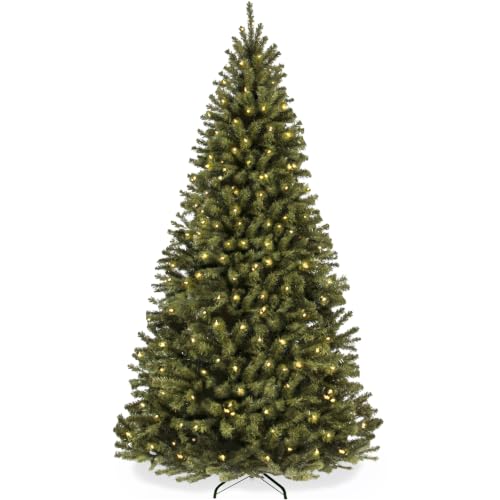
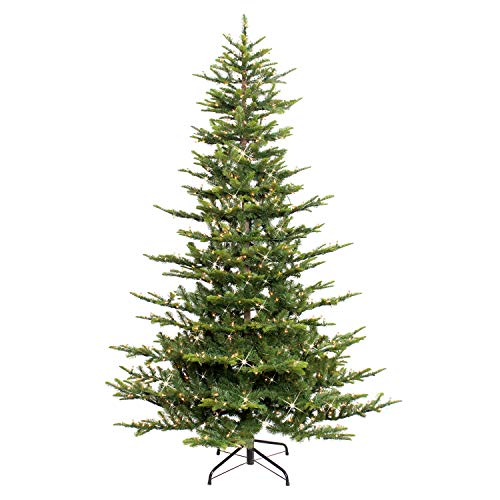
Artificial trees have closed much of the realism gap. Trees with a high tip count and PE molded needles look convincing up close. Flocked models mimic fresh snow. Budget PVC trees still read as obviously fake. The trade-off is simple. A real tree is authentically imperfect; an artificial tree is reliably perfect. You get the same full, gap-free shape every December, which many people prefer for decorating. Artificial also unlocks the pre-lit option, with the lights built in and evenly spaced. If you go artificial, our guides to the best artificial Christmas tree and the best pre-lit Christmas tree shortlist the most realistic models, and how to choose an artificial Christmas tree covers tip count and shape.
Environmental impact: compostable vs reusable, and lifespan
The greener choice is closer than either side claims. A real tree is renewable and compostable. But it's grown, cut, and trucked every year, and it belongs in green waste, not landfill. An artificial tree is made from plastic and metal, with a higher one-time footprint. That footprint divides across every season you reuse it. So the longer you keep it, the lower its impact each Christmas and the better its lifespan pays off. Broadly, two paths are greenest: keep an artificial tree about a decade, or compost a locally grown real tree. The worst outcome is an artificial tree used a couple of years, or a real tree sent to landfill.
Which should you buy?
Buy a real tree if the scent, tradition, and annual ritual matter most, you're happy to water and clean up after it, and you don't mind buying one each year. Buy an artificial tree if you want the same full shape every season, no needle drop or watering, a pre-lit convenience option, and a lower cost spread over many years. If you land on artificial, compare the best artificial Christmas trees, weigh a pre-lit vs unlit model, and grab a sturdy tree stand if you're going real. For yards and porches, the best outdoor Christmas tree guide covers weatherproof options.
Our Picks