

Affiliate Disclosure
Some links on this page are affiliate links. As an Amazon Associate, we earn from qualifying purchases — at no extra cost to you. We do not buy, install, or physically handle the lights and decorations we cover; our rankings come from aggregated owner feedback and expert consensus, not first-hand testing. Commissions never change our verdicts. How we research · full disclosure.
Top 3 Picks
When it comes to incandescent vs LED Christmas tree lights, the tree changes the math: heat and connection limits matter more on a tree than almost anywhere else. LED tree lights run cool and efficient and let you pile on more strands, while incandescent tree lights deliver the warm, old-fashioned glow — but run hot. Here's how to choose for your tree.
What makes Christmas tree lights different?
Lighting a tree isn't the same as lining a roof. You're wrapping many feet of string lights tightly around branches, often on a natural tree that dries out over the season, and you'll usually want several strands connected to reach top to bottom. That puts two factors front and center: how hot the bulbs get, and how many strands you can safely chain. Those two questions largely decide the incandescent-versus-LED call for a tree.
Incandescent tree lights: warm mini lights, more heat
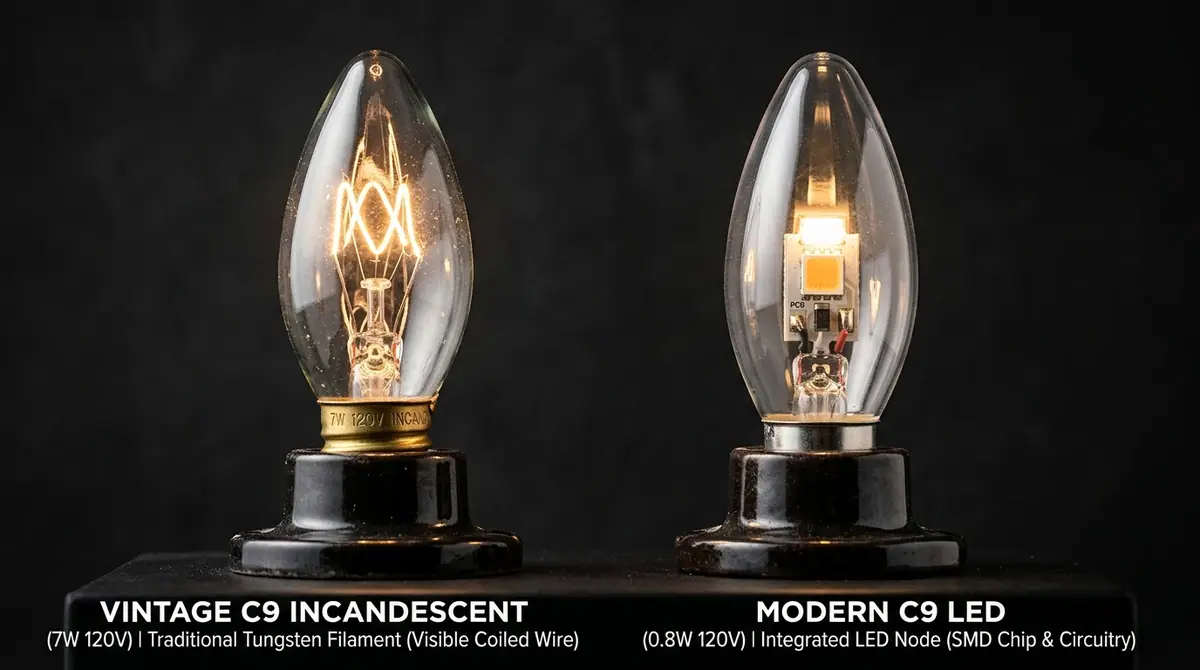
Incandescent tree lights are the classic mini lights most of us grew up with. Their warm, softly flickering glow is genuinely lovely and hard to fully replicate, and they're inexpensive to buy. The catch: the bulbs get hot, they burn a lot more electricity, and you can only connect a limited number of strands before overloading the run. On a dry natural tree, the heat is a real consideration — a good reason to never leave them on unattended.
LED tree lights: cool to the touch, energy-light
LED tree lights stay cool to the touch, use a small fraction of the electricity, and last far longer. Because each strand draws so little, you can connect many more of them end to end — a big advantage on a tall tree where you're stacking multiple sets. Modern warm-white LEDs look close to traditional incandescent, and you also get options incandescents can't easily match, like color-changing and multi-function strands. Look for UL-listed sets, and brands like GE and Govee sell warm-white LED tree lights, some ENERGY STAR rated. The trade-offs are a higher upfront price and, on the cheapest sets, a slightly cooler tone.
Incandescent vs LED tree lights: side by side
| Factor | Incandescent tree lights | LED tree lights |
|---|---|---|
| Heat on the tree | Runs hot | Stays cool |
| Energy use | High | Very low |
| Strands you can connect | Few | Many |
| Glow | Warm, traditional, flickery | Warm-white mimics it; also cool/color options |
| Lifespan | Shorter | Very long |
| Upfront price | Lower | Higher |
Electricity, wattage, and lifespan on the tree
Wrap two or three strands around a full tree and the wattage adds up fast. A trio of 100-bulb incandescent mini-light sets can draw well over 100 watts; the LED equivalent sips a fraction of that, which is why LED tree lights barely register on a power bill even when they run every evening through the season. Lifespan tilts the same way: LED strands are rated for many thousands of hours and routinely last a decade of Decembers, while incandescent bulbs dim and fail sooner, leaving you hunting for the dead bulb that darkened half the strand.
Fire risk, fuses, and how many strands you can connect
The tree is where safety math matters most. Incandescent bulbs run hot enough to be a fire risk against dry needles, so the cool operation of LEDs is a genuine advantage. Both types rely on the tiny fuses in the plug to protect the run — keep the spare fuses that came in the bag, and replace a blown one with the same rating rather than a bigger one. The number of strands you can connect end to end is printed on each tag: incandescent limits are low (often three sets), while LED limits are far higher because each strand draws so little. If the tree stands outdoors, plug the run into a GFCI outlet so any fault to ground cuts power instantly.
Color temperature: warm white, 2700K, and color-changing options
Color temperature, measured in Kelvin, decides the mood. Traditional incandescent sits around 2700K — a golden warm white that flatters green needles and ornaments. Warm-white LEDs are built to match that 2700K tone, so if the classic look matters, buy "warm white" specifically rather than plain "white," which can skew cool and bluish. LEDs also unlock color-changing and multi-function strands (steady, twinkle, fade) that incandescent sets can't do, handy if you like to switch the tree's look through the season.
Which is safer for a real or artificial tree?
LEDs, mainly because they run cool. A real tree dries out as the weeks pass, and hot incandescent bulbs pressed against drying needles are a risk you can simply design out by choosing cool-running LEDs. An artificial tree doesn't dry out, but the heat and connection limits still apply, and a pre-lit artificial tree almost always uses LEDs for exactly these reasons. Either way, keep a real tree watered, avoid overloading connections, and switch the lights off overnight and when you leave the house.
Which should you buy for your tree?
Choose LED tree lights if you have a tall or full tree needing several strands, a natural tree that dries out, or you simply want lower bills and lights that last many seasons. For most people, LED is the better tree choice today — just buy warm white if you want the classic look.
Choose incandescent tree lights if you have a small tree, a tight budget, and a strong preference for that traditional glow, and you're comfortable respecting low connection limits and never leaving them unattended.
Ready to buy? Our best white Christmas lights and best warm white Christmas lights roundups both cover strong tree-lighting sets, shortlisted from the top-rated options on Amazon, and if you're refreshing the whole setup, see the best artificial Christmas tree guide. Want the general (non-tree) version of this decision? Read LED vs incandescent Christmas lights.
Our Picks


