
Affiliate Disclosure
Some links on this page are affiliate links. As an Amazon Associate, we earn from qualifying purchases — at no extra cost to you. We do not buy, install, or physically handle the lights and decorations we cover; our rankings come from aggregated owner feedback and expert consensus, not first-hand testing. Commissions never change our verdicts. How we research · full disclosure.
Top 3 Picks
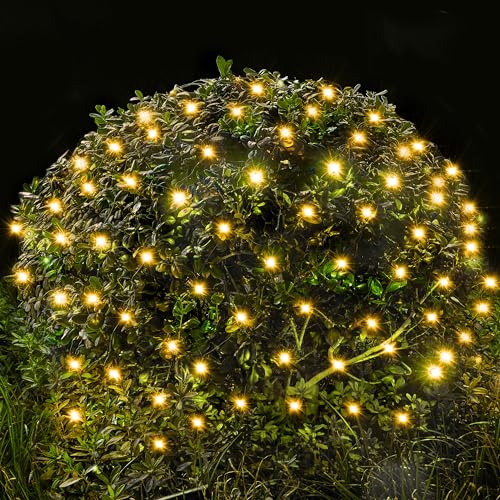
To wrap a bush with Christmas lights, anchor the string at the base near the outlet, then spiral it up and around the shrub, draping the lights across the outer foliage rather than burying them inside. Work back down to fill any gaps and finish where you started so the plug reaches power. It's a simple project, but even spacing and the right amount of lights are what separate a magazine-worthy bush from a patchy one.
Spiral wrapping or net lights: pick your method
There are two good ways to light a bush. Spiral wrapping gives the most even, sculpted result and handles irregular or tall shrubs, but it takes time. Net lights are a mesh you drape over the top and tuck at the edges — dramatically faster on rounded, uniform bushes and hard to get wrong. If you have a row of tidy boxwoods, net lights will save your evening; if you have one statement shrub you want perfect, wrap it. This guide focuses on wrapping, with the net-light shortcut noted where it helps.
What you'll need
- Outdoor-rated LED string lights (or net lights) — enough to cover the bush, connectable end to end.
- A GFCI outlet and an outdoor extension cord rated for the load.
- A tape measure to size the bush and estimate the light count.
- Twist ties or plastic plant clips to anchor the string at the base and tricky spots.
- Gloves for prickly shrubs and a dry evening to work in.
How to wrap a bush with Christmas lights step by step
- Measure and estimate. Measure the bush's height and width, then plan for roughly 100 lights per combined foot for a full look — buy a little extra.
- Position the outlet run. Place your GFCI-protected extension cord so the string's plug end starts at the base of the bush nearest power.
- Anchor the base. Tie or clip the start of the string to a low branch or the trunk so the whole wrap doesn't slide down.
- Spiral upward. Wind the lights up and around the bush in an even spiral, draping them over the outer foliage where they'll show, not buried inside.
- Keep the spacing even. Aim for consistent gaps between passes; step back every few wraps to check for dark patches.
- Work back down to fill. When you reach the top, spiral back down through the gaps to add density and even out the coverage.
- Finish near the start. Bring the tail back toward the base so the plug reaches the outlet, and secure any loose loops.
- Plug in and adjust at dusk. Light it up in low light and nudge the strands to balance bright clusters and dark spots.
How many lights you need for full coverage
Under-lighting is the most common disappointment, so estimate generously. A workable rule is about 100 lights per foot of the bush's height and width combined, which puts a typical 3-to-4-foot shrub in the 100–200 light range for a full glow, and more if you want it dense. Measure the bush rather than guessing, and buy sets you can connect end to end so you can add coverage without a second outlet. LEDs help here: because they draw so little power, you can safely chain more sets together than incandescent strings, making full coverage far easier on a single circuit.
Draping technique for an even, glowing look
The secret to a professional-looking bush is keeping the lights on the surface. Drape each pass across the outer leaves and tips where the glow will be seen from the street, rather than pushing the string deep into the shrub where the foliage swallows it. Vary the spiral slightly so passes don't stack in one line, and use a couple of twist ties on floppy branches to hold the shape. Green wire disappears against foliage in daylight, so the bush looks natural by day and lit by night. For irregular shrubs, wrap the densest, most visible face first, then fill the sides.
Common mistakes to avoid
- Burying the lights inside. Drape across the outer foliage or the glow disappears.
- Under-buying. Estimate ~100 lights per combined foot and get extra — sparse bushes look unfinished.
- Uneven spacing. Step back often; clustered passes leave dark patches elsewhere.
- Using indoor lights. Only outdoor-rated sets on a GFCI belong outside.
- Leaving them up too long. Remove before spring growth so lights don't get overgrown or damaged.
Deciding between wrapping and mesh? Read net lights vs string lights for bushes. For other outdoor greenery, see how to wrap Christmas lights around a tree and how to hang Christmas lights on a palm tree. Planning the whole yard? See how to plan an outdoor Christmas light display. More projects are in the Install & How-To Guides, and to pick sets, compare the best Christmas lights for bushes.
Our Picks