
Affiliate Disclosure
Some links on this page are affiliate links. As an Amazon Associate, we earn from qualifying purchases — at no extra cost to you. We do not buy, install, or physically handle the lights and decorations we cover; our rankings come from aggregated owner feedback and expert consensus, not first-hand testing. Commissions never change our verdicts. How we research · full disclosure.
Top 3 Picks
To keep an artificial Christmas tree from tipping over, work on three things: a wide, locked base on level flooring, added weight over the stand's feet, and a discreet tether from the trunk to a wall stud. A tip-over almost always comes from a top-heavy tree sitting on a base that is too narrow or set on soft carpet. Fix the footprint first, add ballast second, and anchor the tree if children or pets share the room — that order stops nearly every fall.
Why an artificial Christmas tree tips over: top-heavy load, high center of gravity, and a narrow footprint base
A Christmas tree tips when its center of gravity moves past the edge of the base. Two things push it there. The first is a top-heavy load: garland, a heavy topper, and clusters of ornaments high on the tree raise the center of gravity. Slim or pencil trees feel this most because their footprint is small. The second is an unstable base — a stand set on thick carpet, feet that are not fully splayed, uneven locking pins, or a tree skirt bunched under one leg so the tree sits with a slight lean. Address both and the tree stays put.
Step by step: keep an artificial Christmas tree from tipping over
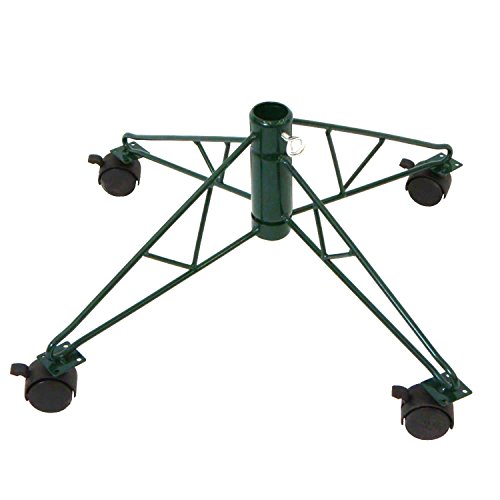
- Fully splay and lock the stand. Open the folding legs of the tree stand to their widest, seat the center pole all the way down, and lock every pin or thumbscrew. A wider footprint is the single biggest gain.
- Level the base on hard flooring. Set the stand on a firm, level surface. On carpet, slip a thin plywood board or a hard mat under the legs so they cannot sink and lean.
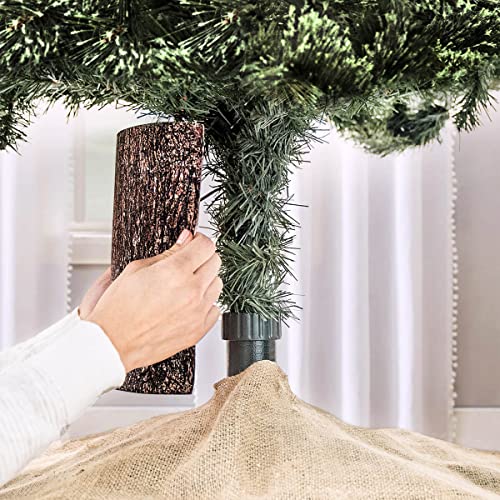
- Weight the base. Lay two or three sandbags, bags of play sand, or exercise weights over the splayed feet, keeping the ballast low and centered. Hide it under the tree skirt.
- Balance the ornament load. Hang the heaviest ornaments on the lower third of the tree and decorate the top lightly. Keep the topper as light as the design allows.
- Anchor the trunk to a stud. Fix a cup hook into a wall stud behind the tree at about two-thirds height, then run clear fishing line or thin coated wire from the center pole to the hook. Keep it taut.
- Add a second tether if needed. For a very tall, slim, or heavily loaded tree in a busy room, run a second line at roughly 90 degrees so the trunk is held from two directions.
- Test it before decorating fully. Give the trunk a gentle push from a few angles. If it rocks or the base lifts, widen the ballast and check the tether before you finish trimming.
Weight the base with sandbags and ballast over the tree stand legs
Ballast at floor level does far more than anything higher up, because it lowers the center of gravity and resists the lever action of a top-heavy tree. Set the weight directly over the stand's feet — sandbags mold nicely around the legs, but play sand, gravel, or flat exercise plates all work. For a bucket-style stand, drop the pole into a wide, heavy bucket and pour sand or gravel around it until the tree feels planted. Keep everything low and tucked under the skirt so the fix stays invisible. If your current stand is flimsy or narrow, a wider, heavier replacement solves tipping on its own — see the best Christmas tree stand picks for models owners rate for stability.
Anchor the trunk with fishing line, a tether, and a wall stud cup hook
A wall anchor and tether is the surest defense in a home with children or pets. Find a stud behind the tree and thread a small cup hook or a rated picture anchor into it at about two-thirds of the tree's height. Tie clear fishing line, thin coated cable, or florist wire around the center pole at that level and back to the hook, snug enough to stop a lean but not so tight that it bows the trunk. One tether to a stud holds a full-size tree; add a second at 90 degrees for a tall tree. Because the line is clear and runs under the branches, it disappears into the tree while quietly doing the work the base cannot do alone. Adhesive hooks such as Command strips can hold a light ceiling tether where a wall stud is out of reach.
Balance ornaments and the tree skirt so weight sits low
How you decorate changes the odds of a tip-over. Hang the heaviest ornaments on the lower third and keep the top light, so the load does not fight the base. Seat every stand foot flat before you add the tree skirt, because a skirt bunched under one leg cants the tree from the start. On thick carpet, a hard board under the feet keeps the footprint from sinking unevenly. These small habits keep the center of gravity where the stand can hold it.
Pencil tree and slim tree tip-over risk: choosing a stable tree and stand
Stability starts with what you buy. A full-profile PVC or PE tree with a sturdy, wide metal stand is far harder to tip than a pencil tree or slim tree on a lightweight folding base, so if your room allows it, a fuller shape is more forgiving. Pre-lit models add a little weight down in the trunk sections, which helps, and a solid stand keeps the whole thing planted. If you are still shopping, compare the best artificial Christmas tree options and the best pre-lit Christmas tree picks for base quality and trunk stability. New to the terms? See what a pre-lit Christmas tree is and what a flocked Christmas tree is before you choose.
Common mistakes that let a tree tip over
- Leaving the stand legs half-open. A narrow footprint tips easily — splay them fully and lock every pin.
- Standing the tree on plush carpet. Legs sink unevenly and the tree leans. Add a hard board under the base.
- Loading heavy ornaments up high. That raises the center of gravity. Keep the weight on the lower third.
- Skipping the tether with kids or pets around. The base alone will not stop a determined pull. Anchor to a stud.
- Bunching the tree skirt under one leg. It cants the tree from the start. Seat all feet flat, then add the skirt.
A stable tree is the foundation for the rest of your display. For more on setup and care, start at the Christmas Trees hub, which links the stand, topper, and lighting guides that go with a well-anchored tree.
Our Picks