
Affiliate Disclosure
Some links on this page are affiliate links. As an Amazon Associate, we earn from qualifying purchases — at no extra cost to you. We do not buy, install, or physically handle the lights and decorations we cover; our rankings come from aggregated owner feedback and expert consensus, not first-hand testing. Commissions never change our verdicts. How we research · full disclosure.
Top 3 Picks
To find a bad Christmas light bulb, first narrow the search to the dark section, then either run a voltage-detector pen along the wire until it stops beeping or swap a known-good bulb into each socket until the string relights. On a series-wired incandescent strand a single failed bulb can black out a whole half-section, so the whole hunt is really about locating that one culprit — and the right tool turns a 20-minute search into a two-minute one.
Why one burned-out bulb darkens a series circuit
Traditional incandescent mini-lights are wired in series within each section. Current has to flow through every bulb in turn, so when one bulb burns out and its filament snaps, the circuit opens and that entire section goes dark. LED strings behave better because many are wired in parallel, but a loose or failed LED near the start of a section can still kill everything downstream of it.
How a shunt and filament fail
Each incandescent bulb has a tiny internal shunt meant to bridge the gap when the filament breaks, keeping the rest of the section lit. But shunts corrode, misfire, or were never great on bargain sets — which is why one tired bulb still takes out a whole run rather than just going dark itself.
Tools: a voltage detector, tester, or LightKeeper Pro
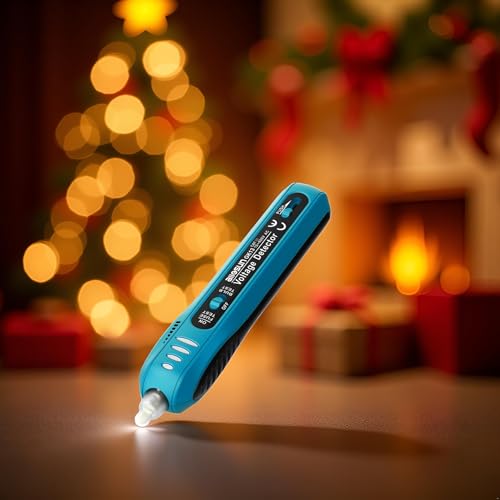
- A non-contact voltage tester (detector pen) — beeps while voltage is present and goes quiet at the bad socket. The single most useful tool for this job.
- A shunt-repair tool such as a LightKeeper Pro — clips onto an incandescent strand and pulses it to re-fire dead shunts, plus a built-in bulb tester and bulb puller.
- A few known-good replacement bulbs that match the string's voltage and base.
- A multimeter set to continuity — confirms whether a pulled bulb is genuinely open before you toss it.
- Good lighting, so you can spot a blackened glass envelope or a broken filament by eye.
How to find a bad Christmas light bulb step by step
Check the fuse and reseat each socket first
- Check the fuses first. Slide open the little door on the plug and inspect the two glass fuses. A blown fuse mimics a dead bulb and darkens the whole strand — swap in matching spares before you hunt bulbs.
- Plug in and isolate the dead section. Note exactly where the lit bulbs stop and the dark ones begin. The bad bulb lives somewhere in that dark run, not in the half that still glows.
- Look for the obvious culprit. Scan the dark section for a bulb with a blackened or cloudy glass envelope, a visibly broken filament, or one sitting loose or missing from its socket.
- Reseat every suspect bulb. Push each one fully down so both wire legs contact the socket. A bulb that has crept out behaves exactly like a burned-out one, so this alone revives many strings.
- Use a voltage-detector pen. With the string plugged in, run the tip slowly along the wire through the dark section. It beeps while voltage is present and falls silent at the socket where the circuit opens — that bulb is your culprit.
- Or pulse it with a shunt tool. On an incandescent set, clip a LightKeeper Pro to the strand and trigger it; the pulses often re-fire the failed shunt and relight the whole section without your ever finding the exact bulb.
- Or swap bulbs one at a time (the no-tool method). Unplug, replace one bulb in the dark section with a known-good bulb, plug in, and check. If it stays dark, move the good bulb to the next socket and repeat until the section springs back.
- Confirm and re-hang. Once lit, let the string run a few minutes to be sure the repair is stable before you put it back on the tree or roofline.
Isolate the dead section and swap a replacement bulb
Before anything else, note exactly where the lit bulbs stop and the dark ones begin — the culprit lives in that dead section, not the half that still glows. Then reseat each suspect, and if reseating doesn't work, swap a known-good replacement bulb into each socket along the dark run, one at a time, until the section springs back to life.
Test a pulled bulb with a multimeter
When you want certainty, pull a suspect bulb and test it with a multimeter set to continuity: a good incandescent bulb beeps, while an open, burned-out one stays silent. It's the definitive way to confirm a bulb is dead before you toss it.
Signs of a dead bulb on LED vs incandescent strings
You can often spot a bad bulb by eye before you reach for a tool. A burned-out incandescent bulb frequently shows a blackened or smoky glass envelope where the filament flared out, or a filament you can see is snapped in two. A bulb that has worked loose sits crooked or slightly raised in its plastic base, breaking contact. On LED bulbs the tells are subtler — a cracked lens, corrosion on the legs, or a bulb that stays dark while its neighbors glow.
What's fixable on LED vs incandescent sets
The approach shifts with the technology. On repairable incandescent and bulb-replaceable sets, everything above applies: check the fuse, reseat, test, and swap. Many modern LED strings are different — some use replaceable bulbs and similar series wiring, but plenty are sealed units where individual bulbs can't be pulled at all. On a sealed LED set your options are to check the fuse and every connection, and if a whole section is genuinely dead, replacement is usually the only realistic fix. Before spending an hour on an old sealed strand, it's worth deciding whether it's worth saving.
Common mistakes when hunting a bad bulb
- Skipping the fuse check. People replace bulbs for an hour when a 30-cent fuse was the real problem — always check fuses first.
- Not reseating before replacing. Many "dead" bulbs are just loose; push them in fully before swapping.
- Fitting the wrong-voltage bulb. A mismatched replacement burns out fast or runs dim — match voltage, base, and color.
- Working on a plugged-in string. Always unplug before you pull or replace a bulb.
- Nursing a hazardous set. If the wire insulation is cracked or brittle, retire the strand rather than keep repairing it.
Once you've found the culprit, see how to replace a Christmas light bulb to fit the new one correctly, or how to test Christmas lights for the full testing workflow. If a whole half went dark, our guide on how to fix Christmas lights that are half out walks through it, and more repairs live in the Troubleshooting & Repair hub. For step-by-step decorating projects, browse the Install & How-To Guides. If a set keeps failing, compare the best LED Christmas lights.
Our Picks