
Affiliate Disclosure
Some links on this page are affiliate links. As an Amazon Associate, we earn from qualifying purchases — at no extra cost to you. We do not buy, install, or physically handle the lights and decorations we cover; our rankings come from aggregated owner feedback and expert consensus, not first-hand testing. Commissions never change our verdicts. How we research · full disclosure.
Top 3 Picks
Learning how to decorate a Christmas tree with ribbon and mesh is the fastest way to take a tree from plain to professional, because ribbon and deco mesh add color, movement, and fullness that ornaments alone cannot. The order matters: lights first, then ribbon and mesh, then ornaments over the top. This guide covers vertical streamers versus spiral wraps, working with deco mesh puffs, how much to buy, and anchoring it all so nothing slips.
Tools and materials for ribbon and mesh
- Wired ribbon in one or two coordinating colors or patterns
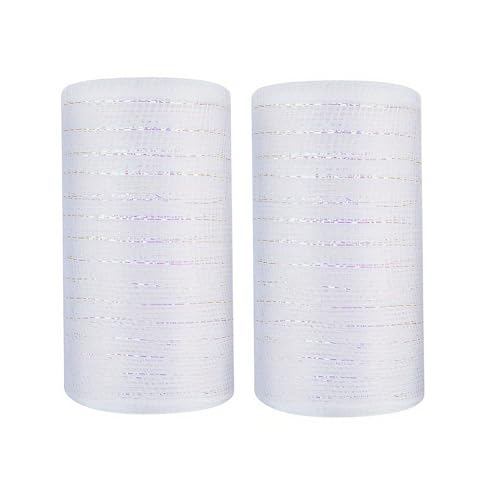
- Deco mesh (tubular netted mesh) for volume
- Tree lights, added first as the base layer
- Floral wire, ornament hooks, and scissors
- A topper bow to finish the top
- Ornaments to layer on last
How to decorate a Christmas tree with ribbon and mesh, step by step
- Fluff and light the tree. Shape the branches and add the lights first, since ribbon and mesh layer over them.
- Plan the pattern. Decide on vertical streamers, spiral wraps, or tucked mesh puffs, and how many sections around the tree.
- Add the deco mesh. Tuck mesh into the branches in even puffs or a continuous spiral to build fast volume.
- Weave the ribbon. Run wired ribbon streamers from the top down, or spiral it around, keeping the spacing even.
- Anchor each end. Wrap ends around interior branches and secure slippery spots with floral wire or hooks.
- Layer the ornaments. Hang ornaments over the ribbon and mesh, largest deep and toward the bottom, smaller toward the top.
- Add the topper bow. Finish the top with a coordinating bow that ties the ribbon colors together.
- Rotate and balance. Turn the tree and even out any side that looks sparse.
The layering order: lights, then ribbon and mesh, then ornaments
The single most important idea is sequence. Lights go on first as the base, next comes the ribbon and mesh to build fullness and color, and ornaments go on last so they sit on top of everything else. Decorators who add ribbon after the ornaments end up fighting the baubles and knocking them loose. With ribbon and mesh in place first, the ornaments layer over the fullness and the whole tree reads as deep and cohesive rather than a plain tree with a few streamers stuck on. Working in a repeating pattern around the tree keeps every side balanced. For coordinating ribbon, see the best christmas tree ribbon roundup.
Vertical streamers versus spiral wraps
Ribbon can run two ways. Vertical streamers drop from the top of the tree straight down, which is the easiest pattern to keep even and draws the eye upward for a tall, elegant look. Spiral or horizontal wraps circle the tree like garland for a fuller, more traditional feel. Many people combine both — vertical ribbon streamers for lines plus tucked mesh puffs for volume. Whichever you pick, even spacing around the tree is what separates a designer look from a haphazard one, so plan your sections before you start.
Working with deco mesh
Deco mesh is the shortcut to a full tree. Because it is wide and puffs up, a roll fills large gaps in seconds — you simply gather a length and tuck it into the branches so it billows out, either as separate puffs at even intervals or as one continuous spiral. Mesh does the heavy lifting on volume, so it is ideal for a sparse or budget tree that needs bulk. Ribbon then adds crisp definition on top of the soft mesh. Budget generously: roughly 20 to 30 feet of mesh per vertical foot of tree for full puffing, which often means two to four rolls on a 7-foot tree. For choosing a fuller base tree, see the best artificial christmas tree guide.
Anchoring so nothing slips
Wired ribbon and mesh are worth the small extra cost because they hold whatever shape you bend them into, so puffs stay puffed and streamers stay put. Anchor each end by tucking it deep and wrapping it around a sturdy interior branch rather than a flimsy tip, which keeps the weight from sagging outward and sliding off. Where a puff or streamer wants to slip, a twist of floral wire or an ornament hook locks it in place invisibly. Anchoring into the tree's interior is the trick that keeps a mesh-and-ribbon tree looking crisp for the whole season.
Common mistakes to avoid
- Adding ribbon after ornaments. It knocks baubles loose. Ribbon and mesh go on before ornaments.
- Uneven spacing. Random streamers look messy. Plan even sections around the tree.
- Unwired ribbon. It goes limp and slips. Use wired ribbon and mesh that hold their shape.
- Anchoring to the tips. Ends sag and drop. Wrap them around interior branches.
- Too little mesh. Skimpy puffs look thin. Budget several rolls for real volume.
Related tree decorating guides
Ribbon and mesh are one part of a styled tree. See how to layer tree lights and ribbon for the full layering system, how to make a Christmas tree look full when the tree itself is sparse, and Christmas tree decorating themes and ideas for color schemes.
Our Picks