
Affiliate Disclosure
Some links on this page are affiliate links. As an Amazon Associate, we earn from qualifying purchases — at no extra cost to you. We do not buy, install, or physically handle the lights and decorations we cover; our rankings come from aggregated owner feedback and expert consensus, not first-hand testing. Commissions never change our verdicts. How we research · full disclosure.
Top 3 Picks
Christmas light extension cord safety comes down to four things: use a cord rated for outdoor use, plug it into a GFCI outlet, match the wire gauge to the run length and light load, and never chain cords together. Get those right and an extension cord is a perfectly safe way to power a display; get them wrong and a cord is one of the most common causes of holiday overheating and shocks. Here's how to size and use cords correctly, with a gauge-by-length table you can follow.
Indoor vs. outdoor-rated cords: the W rating and UL-listed tag
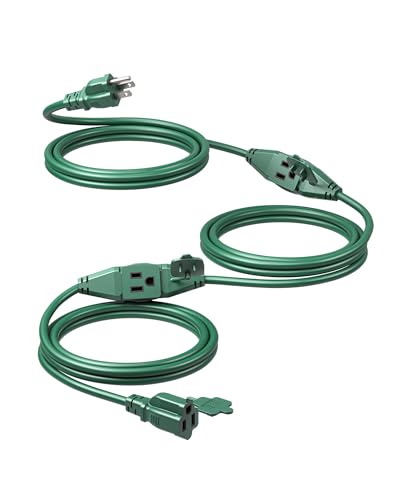
The first rule is location. Indoor extension cords have thinner insulation and are not built to resist moisture, so they must never be used outside. Outdoor cords carry a "W" in the marking and have tougher, weather-resistant jackets. For anything on a porch, yard, or roofline, use a cord marked for outdoor use and look for a UL or ETL listing on the tag. Using an indoor cord outside — even "just for a week" — is how a wet connection turns into a tripped breaker or a shock.
Wire gauge: 16-gauge, 14-gauge or 12-gauge for the length and load
Gauge (AWG) is the thickness of the copper wire, and a lower number means a thicker wire that carries more current with less heat and voltage drop. A cord that's too thin for a long run heats up and dims the lights at the far end. Use this as your starting point, then always confirm against the amp rating printed on your specific cord:
| Cord length | Light load | Recommended gauge |
|---|---|---|
| Up to 25 ft | Light (LED strands) | 16-gauge outdoor |
| 25 to 50 ft | Medium (mixed sets) | 14-gauge outdoor |
| 50 to 100 ft | Heavier / incandescent | 12-gauge outdoor |
| 100 ft+ | Any large display | 12-gauge, split across circuits |
The load side of the equation is easy with LEDs — they draw so little current that a 16-gauge cord handles a lot of strands. Incandescent lights draw about ten times the power, so long incandescent runs are where you need the thicker 12-gauge cord and, often, more than one circuit. See what gauge extension cord for Christmas lights for a deeper breakdown.
GFCI protection and dry connections outdoors
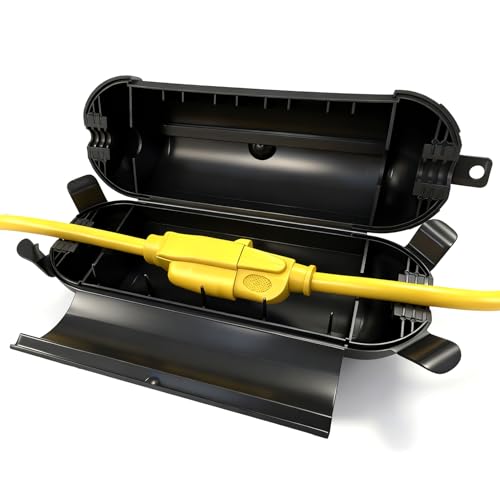
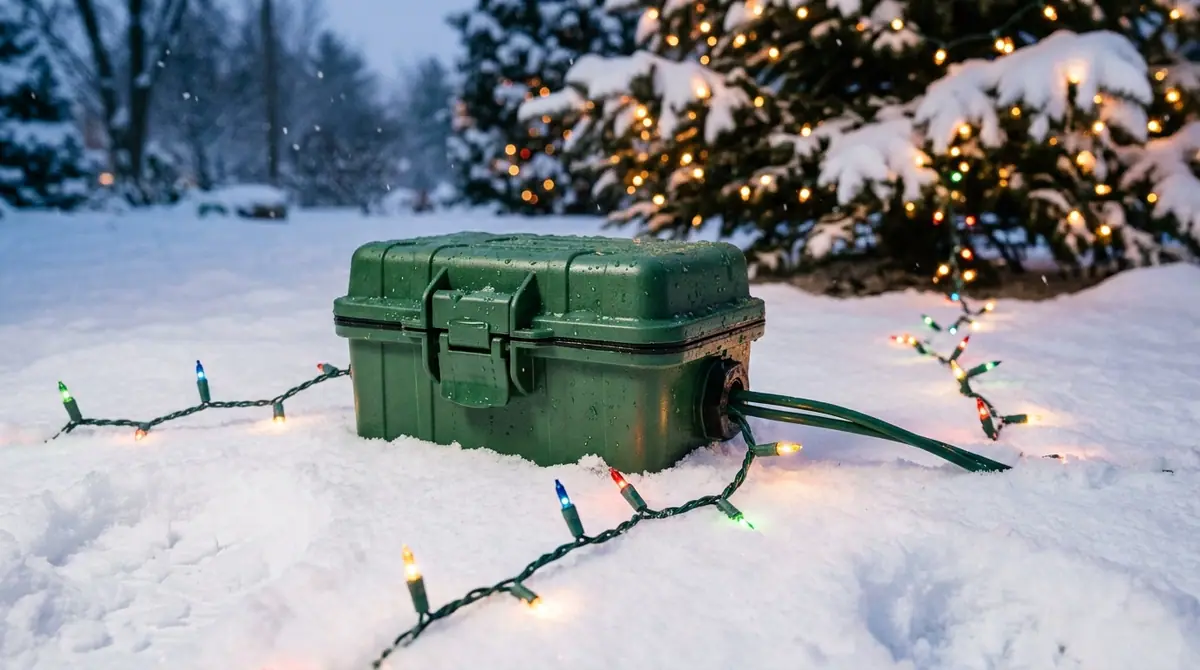
Outdoors, a GFCI (ground-fault circuit interrupter) is the safety device that matters most. It monitors the current going out and coming back, and if even a small amount leaks to ground — say through a rain-soaked connector — it cuts power in milliseconds, before it can shock you. Plug outdoor cords into a GFCI outlet, or use a GFCI-protected cord or plug-in adapter if your outlet isn't protected. Keep every connection off the ground and out of standing water, and tuck the plug-to-plug junctions inside a weatherproof cord cover or a plastic container.
The mistakes that overheat a cord: daisy-chaining and voltage drop
Most cord problems come from a short list of avoidable errors. Chaining several cords together adds resistance and heat at every junction. Running a cord under a rug traps that heat with nowhere to escape. Pinching a cord in a slammed door or window crushes the insulation and can expose wire. Coiling a working cord tightly makes it run hotter because the heat can't dissipate. And overloading — plugging more strands into a cord than its gauge allows — is the classic cause of a warm, failing cord. Fix these and a cord runs cool and safe all season.
A safe-use extension cord checklist
- Right cord for the place. Outdoor "W"-rated, UL-listed cords for anything outside.
- Right gauge for the run. 16-gauge short, 14- or 12-gauge for long or heavy loads.
- GFCI outdoors. Always, and keep connections dry and off the ground.
- One cord per run. No daisy-chaining cords; use a single cord long enough for the job.
- Uncoiled and unpinched. Lay cords flat, never under rugs or through slammed doors, and check for warmth.
Related reading: what gauge extension cord for Christmas lights and how many light strands you can connect safely. Worried about overall fire risk? See are Christmas lights a fire hazard. For more basics, visit the Christmas Lights 101 & Safety hub.
Our Picks