
Affiliate Disclosure
Some links on this page are affiliate links. As an Amazon Associate, we earn from qualifying purchases — at no extra cost to you. We do not buy, install, or physically handle the lights and decorations we cover; our rankings come from aggregated owner feedback and expert consensus, not first-hand testing. Commissions never change our verdicts. How we research · full disclosure.
Top 3 Picks
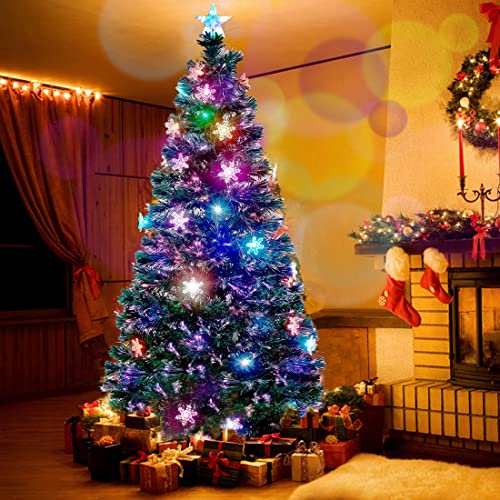
The best fiber optic Christmas tree lights itself — a single LED in the base sends color glowing up through the branches, so there are no light strings to wire and the tips fade through changing hues on their own. The picks below compare the top-rated fiber optic Christmas trees by real owner ratings and review volume, from compact tabletop models to full floor trees, so you can choose the size, color modes, and base quality that fit your space.
How we picked the best fiber optic Christmas trees
We did not plug in each tree on our own table. Instead, we compared the highest-rated fiber optic Christmas trees on Amazon by what owners report across their reviews, weighting toward trees praised for bright, even fiber glow, vivid color changing, and a reliable base light unit. Every rating shown on the cards comes from live listing data, never invented. The clearest lesson in the reviews is that the base light source is the weak point — trees with a strong, ideally replaceable LED unit satisfy owners for years, while dim or hard-to-replace bases are the top complaint.
How a self-lighting fiber optic Christmas tree works
A fiber optic tree is an all-in-one, self-lighting design. Thin fiber optic strands run through the branches and gather at an LED light source in the base; when powered, light travels up each strand and glows at the tips. A color wheel or multicolor LED cycles the tips through changing shades, creating a gentle, ever-shifting light show from a single plug. Because the strands are the lighting, there are no separate strings to string — the main reason owners choose these self-lighting trees for quick, tidy setup.
Color changing modes, the color wheel and LED base
The base does the work, so its quality decides the effect. Most fiber optic trees slowly fade the tips through a rainbow of colors; better models add a steady warm white or single-color mode and a remote to pick a shade, hold it static, or adjust the fade speed. Because a color wheel and LED unit sit inside the base, keep it dust-free and check whether the bulb or light module can be replaced, since that is the part most likely to need service over the years.
Warm white, rainbow glow and remote control
If you prefer calm over color, look for a tree with a steady warm white mode alongside the rainbow fade, and a remote so you can switch between them without reaching behind the tree. The best bases let you hold a single color, run a slow glow, or cycle the full rainbow, all from the remote — useful for matching the tree's light to the rest of the room.
Sizing: 2ft tabletop vs 6ft floor fiber optic trees
Fiber optic trees are at their best in smaller sizes. Tabletop trees of 2ft to 4ft glow beautifully on a desk, mantel, or entry table and make an ideal second tree or apartment tree. Floor models up to 6ft anchor a corner or small room. The luminous tips make even a compact tree eye-catching, so you rarely need a large one for impact. Measure your surface and the headroom above it, and remember the base needs to sit near an outlet.
Fiber optic strands, branches and light source tips
The finer the fiber optic strands and the denser the branches, the fuller the glow, so check both when comparing trees. The light source in the base feeds every strand, and the tips are where the color shows — handle the delicate strands gently so none snap, since a broken strand leaves a dark tip. Some trees add a music box in the base for sound alongside the light.
Fiber optic vs pre-lit and flocked trees
A fiber optic tree trades customization for convenience. A traditional pre-lit tree gives you steady, brighter strings and room for many ornaments, while a flocked tree adds a snowy look; both rely on light strings you can supplement. A fiber optic tree instead delivers a self-contained, color-shifting glow with almost no setup, but the branches are finer and hold fewer heavy ornaments. Choose fiber optic for effortless, changing light in a small space, and a pre-lit tree when you want a fuller, more traditional display.
Fiber optic tree care and mistakes to avoid
- Protect the fibers. The strands are delicate — bend gently and never crush them during setup or storage.
- Mind the base light. Keep it dust-free and prefer a tree with a replaceable LED or bulb.
- Use light ornaments. Fine tips hold small, light decorations best; heavy ornaments droop the branches.
- Place near an outlet. The whole tree runs from the base plug, so plan its spot around power.
Comparing tree styles? See our best mini Christmas tree and best tabletop Christmas tree guides for other small options, compare a best pre-lit Christmas tree, or browse the full Christmas trees pillar for every style and size.
Our Picks